In 30 seconds
- ShopDeck’s journey began with the social-commerce and value-commerce marketplace WMall in 2018, followed by NuShop in 2022.
- Its current approach combines technology, managed operations and growth support for merchants building independent online brands.
- The company says its pricing is linked to delivered orders, with no upfront website setup or subscription fees.
- Its next priorities include stronger AI capabilities and making digital-commerce expertise more accessible to businesses in Tier-2 and Tier-3 cities.
For many Indian small businesses, getting a product listed online is only the beginning. Building a recognisable brand, finding customers and retaining enough from each order to grow the business require a different set of capabilities. That gap has shaped ShopDeck’s journey.
The company, whose founders are Rishabh Verma and Harmin Shah, describes its starting point as an observation about sellers on marketplaces such as Amazon and Flipkart. They could reach an existing customer base, but building their own identities and direct relationships with buyers required expertise across marketing, technology, logistics and operations.
“We saw a fundamental difference between helping someone sell online and helping them build a business online,” ShopDeck said in written responses to Global Startups Club.
Its first approach was WMall, launched in 2018 to explore social commerce and value commerce. Working with merchants gave the team a closer understanding of sellers’ needs and the limitations of that model. In 2022, it shifted towards NuShop, helping businesses establish their own online stores and take greater ownership of their digital presence.
That shift also revealed how much work remained after a store went live. Merchants needed to acquire customers, manage orders and deliveries, control costs and understand whether sales were generating a profit. Those requirements shaped NuShop’s evolution into ShopDeck.
“The experience taught us to remain flexible about the solution while staying committed to the problem we set out to solve,” the company said.
ShopDeck’s current model brings technology together with managed operations and growth support. It says it directly manages operational activities such as order processing, while providing merchants with performance insights and recommendations to guide business decisions. Its AI-powered creative tool generates static advertising creatives, intended to reduce the time and resources merchants spend on marketing production.
The commercial focus is on what happens beyond the advertising dashboard. Return on advertising spend, or ROAS, shows one part of the picture. Failed deliveries, returns, customer acquisition costs, shipping expenses and product margins all affect what a merchant ultimately retains.
ShopDeck says its technology provides visibility into these measures, including delivered orders and return-to-origin rates, while its teams help merchants turn the information into growth decisions. Its pricing follows a similar approach: the company reports zero upfront website setup and subscription fees, with performance-based pricing linked to delivered orders.
That structure is intended to connect its commercial incentives with merchant outcomes. The responses do not specify the applicable rates or establish that every merchant achieves profitability.
A jewellery brand illustrates how ShopDeck describes its work with growing businesses. The unnamed Indian direct-to-consumer brand had been working with the company for approximately a year and a half at the time of its responses. ShopDeck says the engagement involved strengthening its online-commerce infrastructure, improving marketing and creative work, supporting customer acquisition and streamlining order management.
The team also sought to connect advertising activity with orders, successful deliveries and wider business performance. ShopDeck did not provide numerical changes in the brand’s sales, profitability or customer reach, so the example describes its working approach rather than a measured growth result.
For its next phase, ShopDeck plans to strengthen its technology and AI capabilities, including tools for creating marketing assets and creative variations. It also sees an opportunity among businesses in Tier-2 and Tier-3 cities that have strong products but limited access to digital-commerce expertise and infrastructure.
Its advice to an MSME founder taking a business online begins with the customer and the economics of each order. Know who the product is for, why someone would choose it and how much remains after acquisition, shipping and returns. The company also advises founders to focus on their products and customers rather than attempting to build every operational capability internally from the outset.
For ShopDeck, the ambition is to help more sellers build brands that customers recognise and return to. Its account of the journey places the practical work of marketing, fulfilment and business economics at the centre of that ambition.
Disclosure & image credits
Disclosure: Global Startup Summit works with a lot of startups and brands across the ecosystem. A lot of these companies have overlapping interest in the conferences and area of news interest.
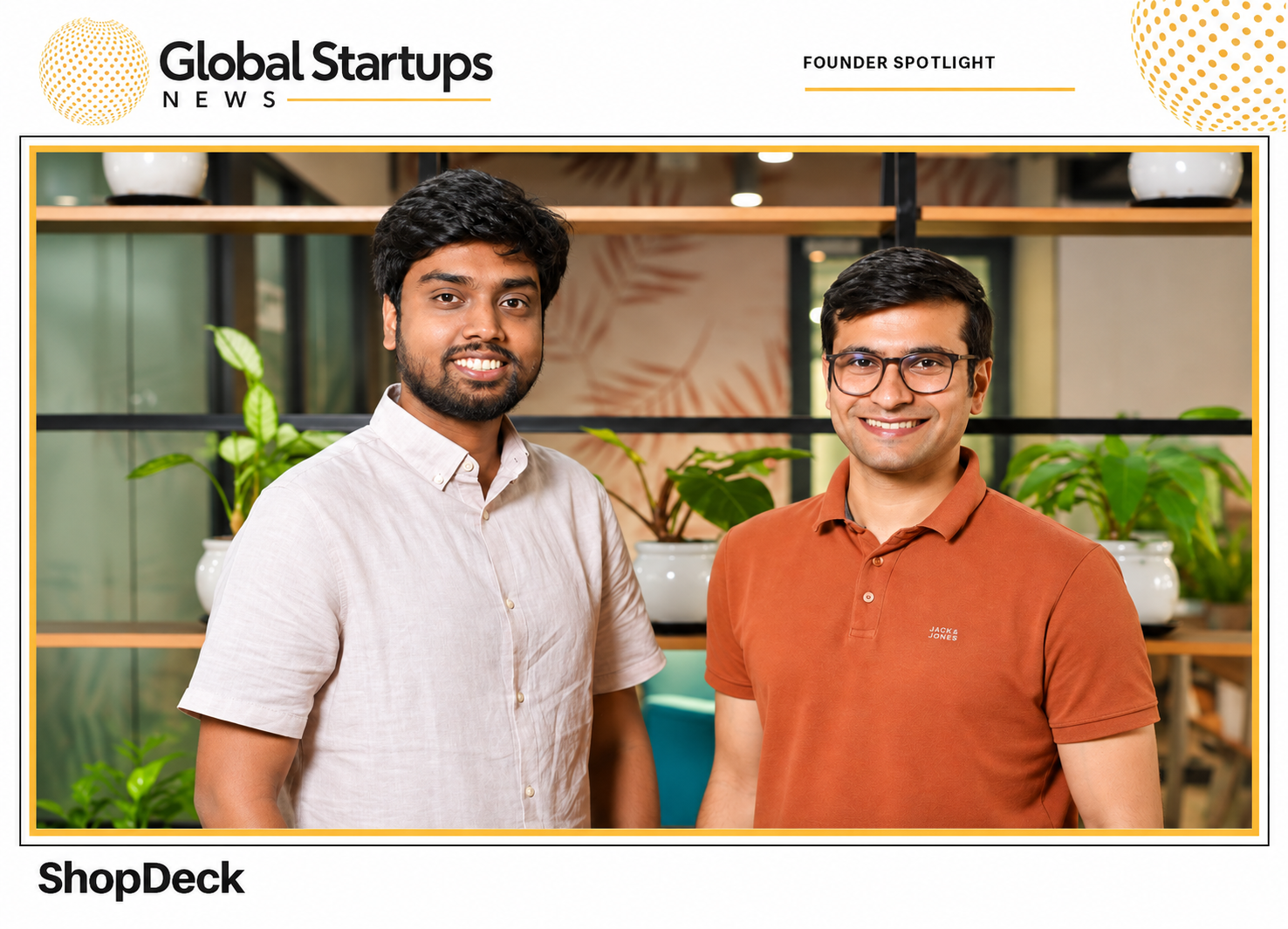
Image credit: Founder photograph supplied for this article. Rishabh Verma (left) and Harmin Shah (right).